
Additional information
| Dimensions | 72 × 72 × 75 cm |
|---|---|
| Tear Sheet | Available upon request |
5490,00 €
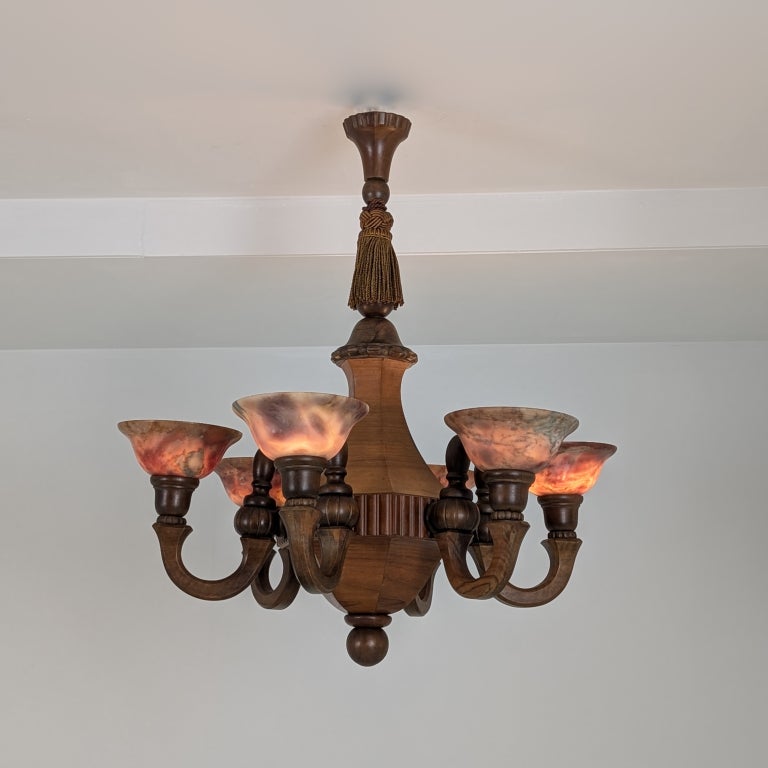
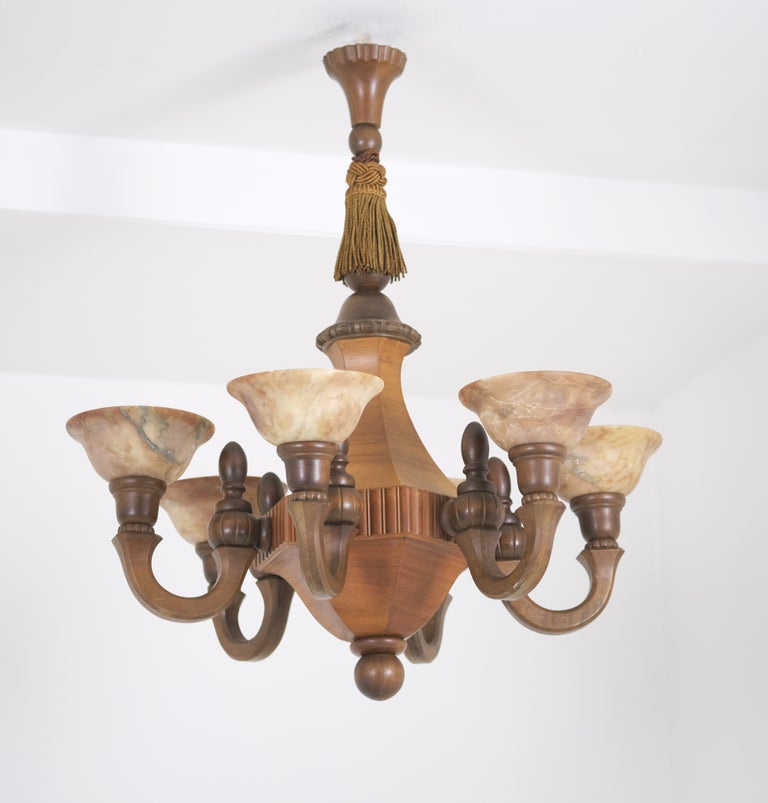
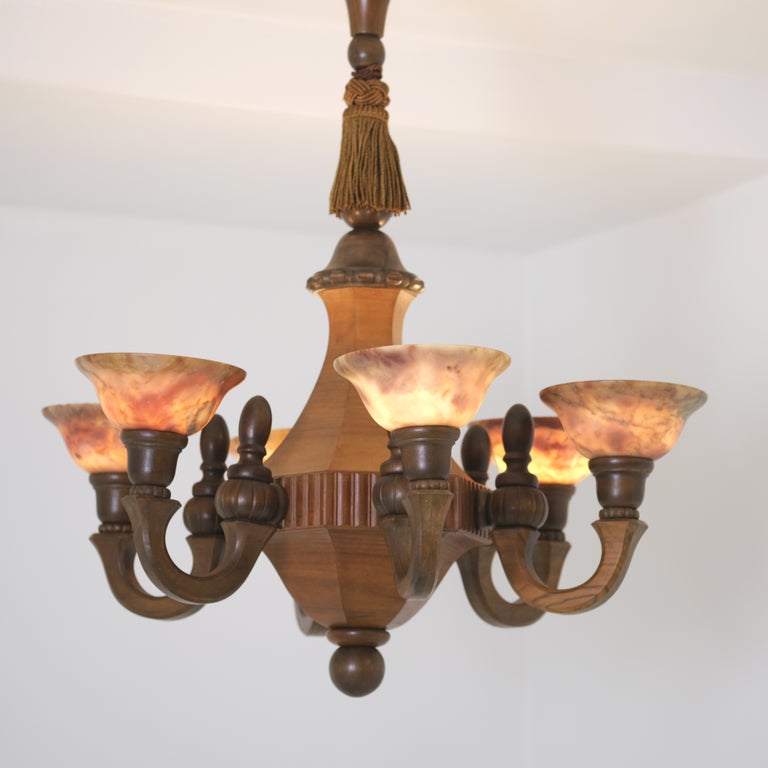
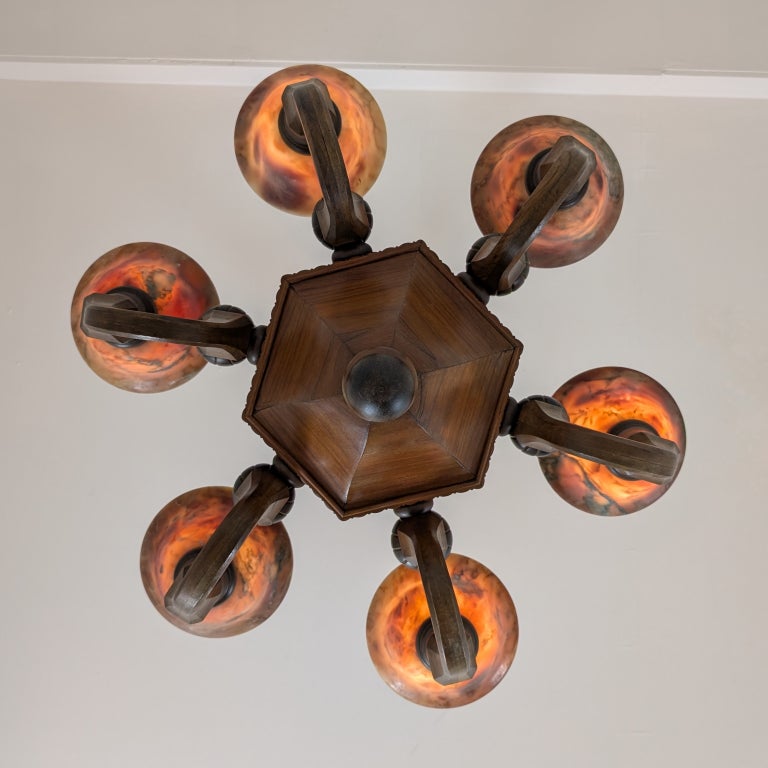
An unusual and beautifully detailed German wooden chandelier from the late 1920s, combining the architectural geometry of Art Deco with the decorative character of traditional turned woodwork. Its balanced silhouette brings together sweeping curves, faceted surfaces and sculptural finials, giving the lamp a distinctive presence. The contrast between the warm wooden structure and the softly mottled shades adds considerable depth and character, both illuminated and unlit.
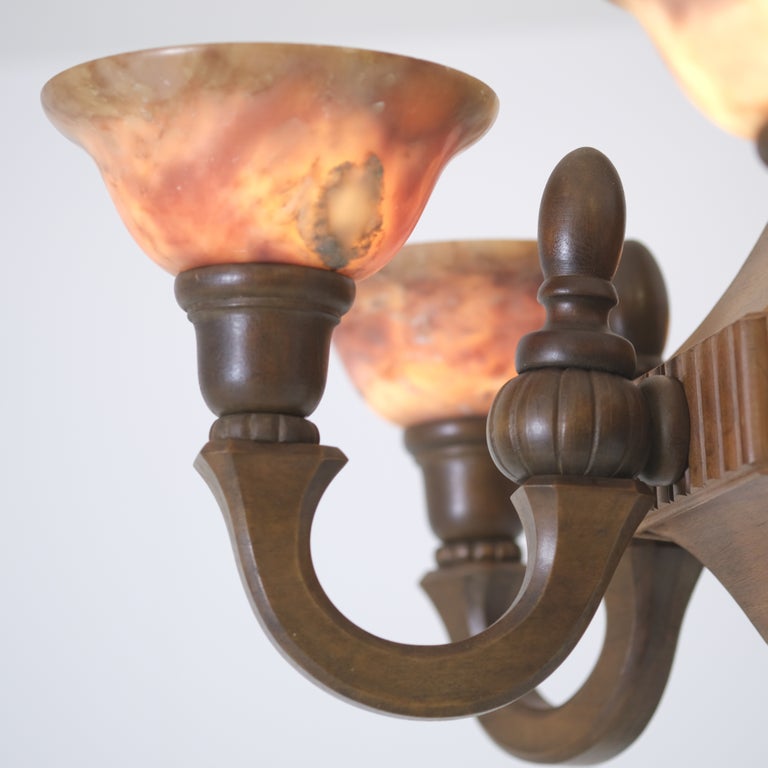
The chandelier is constructed around a substantial, faceted central body with a tapering upper section and a rounded lower bowl, separated by a band of vertical fluting. Curved wooden arms extend outwards to support the upward-facing shades, while turned and carved details articulate the points where the arms meet the body. Contrasting honey and deeper brown tones emphasize the different elements of the construction and the natural grain of the wood. A spherical lower finial, shaped wooden ceiling canopy and decorative cord tassel complete the composition.
The bowl-shaped shades appear to be alabaster, displaying varied cream, amber and soft rose tones with darker mineral-like veining. When illuminated, their translucent surfaces develop a rich, warm glow, revealing the individual patterns within each shade and creating an inviting atmosphere.
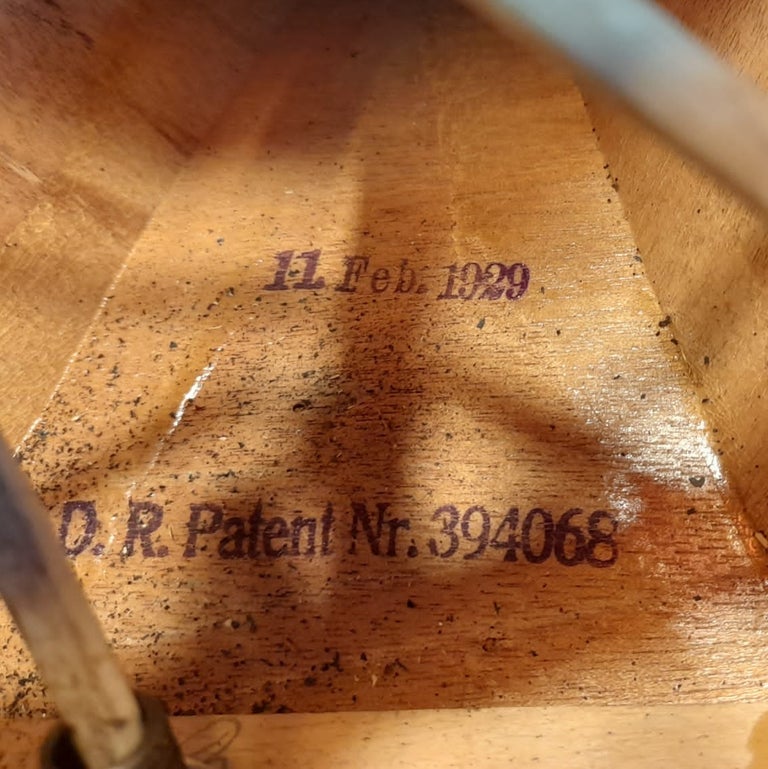
The interior bears the date stamp “11 Feb. 1929” together with the marking “D.R. Patent Nr. 394068,” providing an interesting documentary detail.
The chandelier remains in good vintage condition, with wear consistent with age and use. The wooden surfaces have an attractive aged patina, and the wiring has been updated to modern standards. A distinctive pendant for a dining room, entrance hall or living space, where its sculptural wooden construction and atmospheric light can be fully appreciated.
| Dimensions | 72 × 72 × 75 cm |
|---|---|
| Tear Sheet | Available upon request |


