

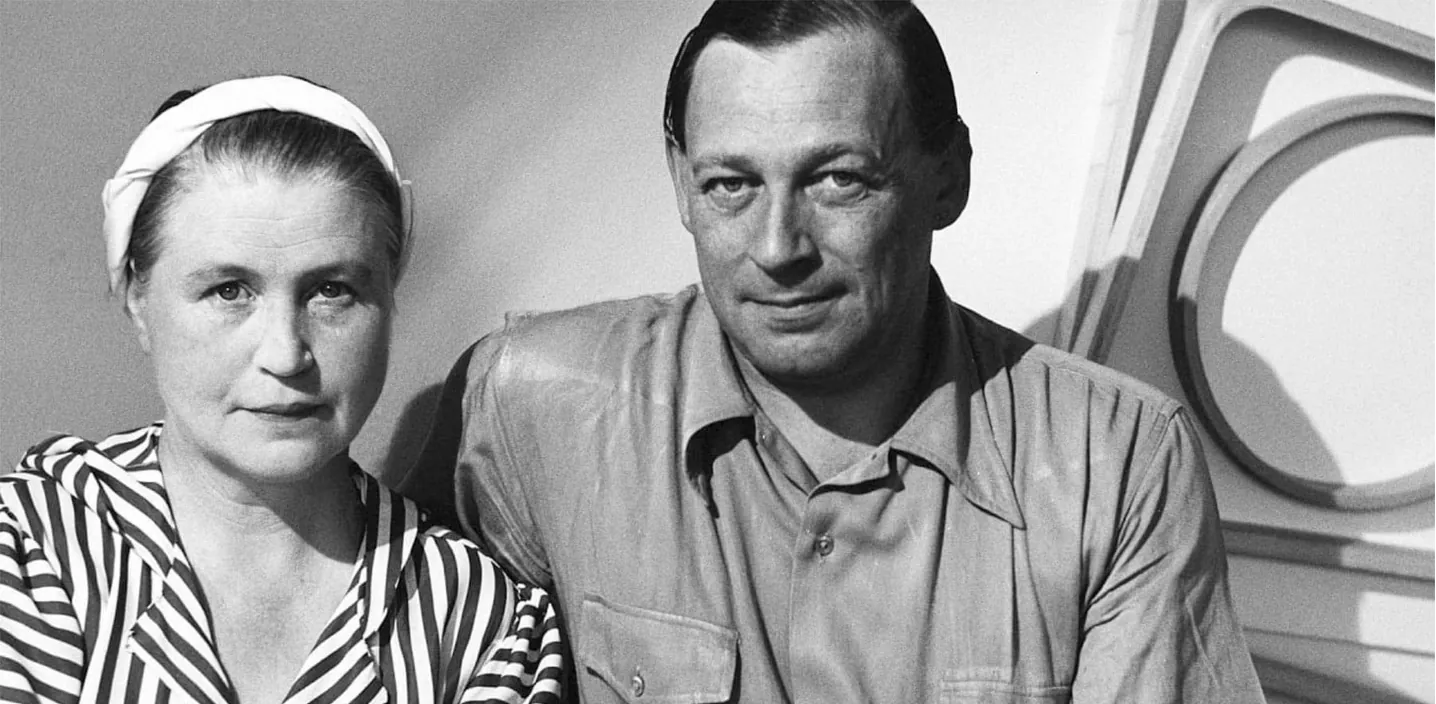
Aino & Alvar Aalto: Two Individual Minds, One Shared Vision
History often rewards singular figures. Names become shorthand for movements, cities, entire ways of seeing the world. In Finnish modernism, that name is most often Alvar Aalto — and rightly so. His contribution to architecture and design is vast, original, and enduring.
At the same time, the story remains incomplete without Alvar’s first wife and business partner, Aino Aalto. Her intelligence, creative vision, and professional judgment played a decisive role not only in what was designed, but in how modernism entered everyday life. Although Alvar later remarried after Aino’s untimely death at 54, her influence on their shared work and legacy is undeniable. Perhaps because her life and career were cut so short, she never received the full recognition she deserved. Their achievements are therefore best understood not through hierarchy, but through collaboration.
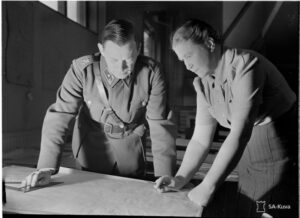
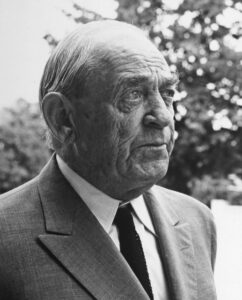
Alvar Aalto: The Architect Who Humanized Modernism
Alvar Aalto is widely recognized for expanding the language of modernism. While firmly grounded in rationalist principles, his work consistently resisted rigidity. He favored forms, materials, and spatial arrangements that responded to human use rather than abstract ideals. His spaces curve, absorb sound, temper light, and respond to the body.
Drawing was central to his thinking. Before architecture, sketching was his primary means of exploration and problem-solving. Even after briefly experimenting with painting, drawing remained a working tool rather than a representational exercise. It allowed him to test ideas freely and develop spatial concepts incrementally.
That approach carried directly into his architecture. His buildings were manifested into existence rather than imposed. He had an extraordinary ability to communicate ideas verbally, gathering people around a vision and pulling it into reality through conviction. Clients, collaborators, craftsmen—he brought them into the process through belief as much as instruction.
Like none of us, by no means was Alvar Aalto perfect. He was stubborn, egoistic and at times deeply self-serving. Designs developed by others, including Aino Aalto and Maija Heikinheimo, were frequently absorbed under his name. Almost every piece produced by Artek has at some point in history been attributed to Alvar and circulated as such. Regardless of that, he deserves his status as an icon not because he followed modernism, but because he reshaped it.
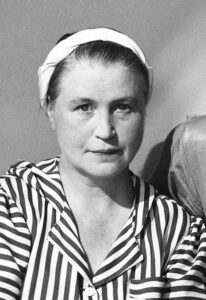
Aino Aalto: Precision, Use, and the Architecture of Daily Life
Trained as an architect and deeply analytical in her thinking, Aino Aalto focused on the scale where architecture meets life. Interiors, furniture, lighting, glassware—these were not secondary concerns for her, but essential ones. She understood that no architectural idea survives unless it works at the level of everyday use.
Her designs are characterized by restraint and clarity. They are rarely expressive for their own sake and instead prioritize proportion, material quality, and durability. Because they integrate so seamlessly into everyday use, they often go unnoticed—an attribute that has contributed to her historical under-recognition. Many furniture and lighting designs historically attributed solely to Alvar were, in reality, collaborative efforts or originated with Aino herself.
Aino also played a decisive role in shaping how modern design entered people’s homes. As a founding force and later managing director of Artek, she was responsible not just for objects, but for how they were distributed. Her influence ensured that modern design was presented as practical and attainable rather than theoretical or exclusive.
A Shared Ethos, A Lasting Atmosphere
To separate Alvar and Aino too cleanly would be a mistake. Their most significant contributions emerged from a shared outlook, shaped through ongoing collaboration.
Alvar brought conceptual ambition, public presence, and architectural scale. Aino contributed structure, precision, and close attention to use. Together, they treated furniture, lighting, and interiors as extensions of architecture rather than accessories.
They believed that architecture extended beyond walls, that furniture and lighting were integral to a space. They believed that industrial production could coexist with craftsmanship, and that functional efficiency did not require emotional detachment. Design, for them, carried responsibility to the spaces where daily life unfolds.
Artek: Their Most Enduring Work
Their shared philosophy is perhaps most clearly expressed through Artek, that is still operational and thriving.
Founded in 1935 by Alvar and Aino Aalto alongside Maire Gullichsen and Nils-Gustav Hahl, Artek was conceived as more than a furniture manufacturer. It functioned as a platform for integrating architecture, design, and everyday life.
Artek’s significance lies less in individual products than in its purpose. Furniture and lighting were designed for widespread use, intended to age naturally rather than remain pristine. The goal was durability, adaptability, and long-term relevance.
Aino’s role within Artek was decisive. As managing director, she shaped its operational structure and public identity. Her oversight ensured consistency between architectural ideals and domestic reality, allowing modern design to move beyond theory and into everyday environments.
In many ways, Artek is their most complete collaboration. Alvar contributed vision and momentum, while Aino provided continuity and discipline. Together, they ensured that Artek translated modernist ideas into practical use. Where many modernist experiments remained theoretical, Artek made modernism practical. It entered homes, schools, libraries, and public buildings on an unprecedented scale in Finland.
A Legacy That Still Lives
After Aino’s death in 1949, the balance inevitably shifted. Alvar continued to build, teach, and travel, and history followed the visible figure. Today, as design culture closely examines attribution, the Aaltos feel more relevant than ever. Modernism did not become human by accident. It became human because Alvar and Aino Aalto made it so—together.

The story of Finnish design reaches far beyond the mid-century era. Discover how Nikolai Boman and his family helped lay the foundations of Finland’s furniture industry in our related article “The Forgotten Dynasty of Finnish Design: How Nikolai Boman and His Sons Helped Build Finland’s Furniture Industry“.
Author: Elias Haddadin
